I really liked the idea that the question in class posed today about who the 'best' or 'most successful' personal ruler had been throughout history. While His Excellency President for Life, Most Excellent Lecturer, Dr. Prof. Xavier Marquez, GCMG., CH., KG., RA., Overlord of all the Squishy things in the Sea, Penguins in the North, and Conqueror of POLS209 Students and Rowdy Ones in Particular offered a convincing argument around social success and personal success, I immediately thought of Machiavelli and 'the Prince.'
Machiavelli references in Chapter 9 about becoming a prince through the selection of one's citizens, and mentions selection by the great and selection by the people.
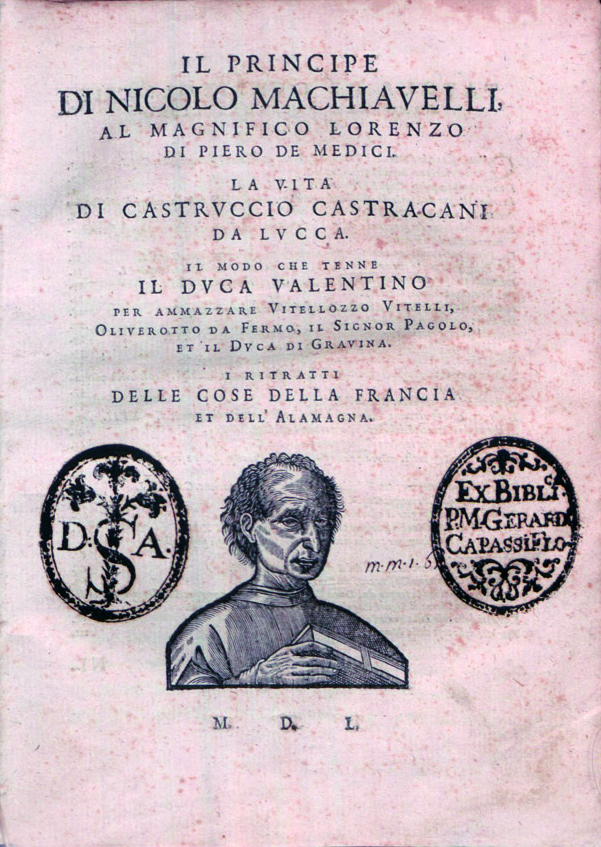 Machiavelli specifically says that the coming to power solely supported by the great is unstable, and that the great need to be 'made and unmade' regularly to your convenience.
The Prince is a fantastic book because it is so deliciously evil and it is a practical 'How to' guide when it comes to being a ruthless, badass dictator. He mentions that a Prince must strike hard and past when consolidating their power through criminal means, and strike against his opponents and rivals all in one foul swoop, so as to avoid the mushrooming of troubles in the future of his reign.
He also describes fear as being a means to an end, and the end being the security of a prince. He justifies an individual ruling through fear because man would find it harder to commit violence against one he fears (because of repercussion ) rather than against one whom he loves.
What do y'all think of Machiavelli? Do his writings support this idea of personal rule, or do they contradict some of the case studies?


Oooh, I like the "Conqueror of POLS209 Students and Rowdy Ones in Particular" title. I may even give some points to the class because of that!
ReplyDeleteThe "Prince" is a perennial favorite of personal rulers everywhere, and indeed it was written in part as a manual for the aspiring ruler in situations of "unregulated" political competition.